
GroceryBrands.net is a participant in the Amazon Services LLC Associates Program. When you click our Amazon affiliate links and make a purchase, we earn a commission at no extra cost to you.
Most ketchup bottles don’t “go bad” in a dramatic way. They fade.
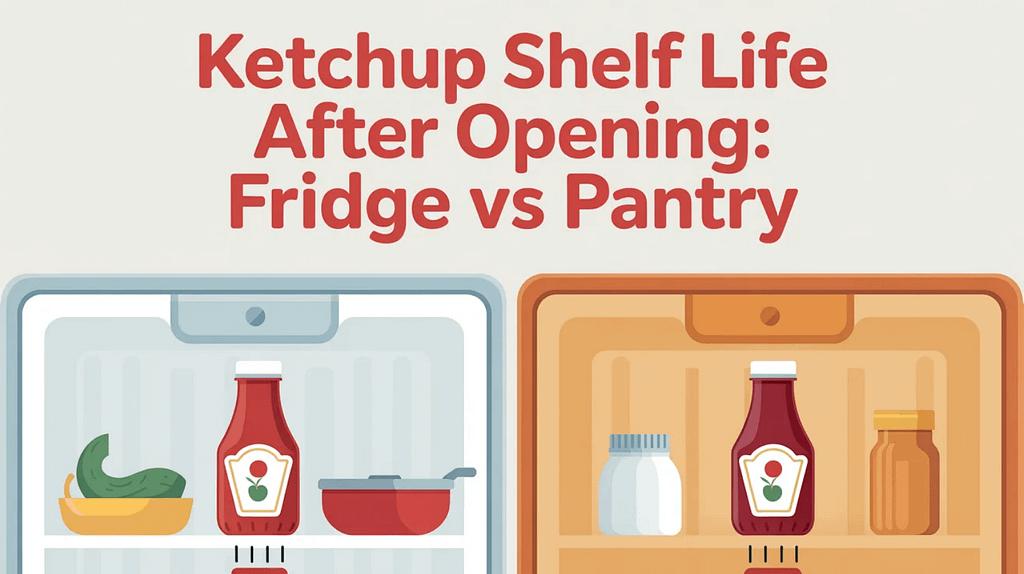
One month it tastes bright and satisfying. A little later, it tastes duller, darker, and oddly flat, even if it still looks “fine.” That’s usually the real story with ketchup: the biggest change is often quality before it becomes true spoilage.
Tomato ketchup lasts a long time because vinegar and tomatoes help keep it stable, but what happens after opening depends on how the bottle is handled day to day.
The two things you’re really asking: “safe” vs “tastes good”
When people ask how long ketchup lasts, they usually mean one of two questions:
- Is it still safe?
- Does it still taste like it should?
Ketchup can stay safe longer than it stays delicious. That’s why storage advice often sounds confusing. The goal isn’t only safety, it’s also keeping that fresh, bright flavor you bought it for.
Fridge vs pantry: what actually changes
Keeping ketchup in the fridge
Refrigeration slows down flavor changes and helps ketchup stay closer to “new bottle” taste.
In the fridge, ketchup usually stays:
- brighter in flavor
- more stable in color
- more consistent in texture
Keeping ketchup in the pantry (or on the counter)
Many people do this, and ketchup often holds up for a while because it’s tangy and processed. But the bottle is more likely to:
- darken faster
- taste less fresh
- separate more over time
If you’re the type who finishes ketchup quickly, counter storage may not make much difference. If a bottle lasts weeks or months, the fridge wins.
Ketchup can stay stable because it’s naturally tangy, but “stable” isn’t the same as “tastes great.”
What makes ketchup last longer after opening
The biggest factors aren’t mysterious. They’re everyday habits.
1) Clean handling
Every time crumbs, grease, or a used utensil touches the bottle opening, you’re adding something that wasn’t meant to be there. Ketchup resists a lot, but repeated contamination speeds up off flavors.
2) Tight lid
A loose cap invites air and odors. Over time, that can flatten flavor and make ketchup smell “different,” especially in the fridge.
3) Steady temperature
Moving the bottle between hot and cold environments repeatedly can speed up quality loss. A steady home base helps.
Separation vs spoilage: how to tell the difference
Separation (usually normal)
Separation looks like watery liquid around thicker ketchup. It’s common and usually harmless.
If it smells normal and tastes normal, it’s typically just a texture issue.
Ketchup is made to be thick, smooth, and clingy, and separation is what happens when the liquid and solids drift apart over time.
A quick shake usually fixes it.
Spoilage (what to watch for)
Spoilage signs are more about smell, taste, and visible changes.
Watch for:
- mold around the cap or opening
- a sharp “off” smell that isn’t normal vinegar tang
- a bitter or metallic taste that feels wrong
- heavy bubbling or pressure in the bottle (unusual for ketchup)
- extreme discoloration paired with bad smell
If you see mold, don’t scrape it off and keep going. Toss the bottle. Mold around the opening can mean it’s already inside.
Why ketchup changes color over time
Ketchup can darken after opening even if it isn’t spoiled. This usually happens because of:
- air exposure over time
- temperature changes
- slow quality shift in the tomato base
A darker color often signals “older flavor,” not instant danger. The ketchup may still be usable, but it might taste less fresh.
How long does opened ketchup last?
There isn’t one perfect number because usage and storage habits vary. A bottle used daily and kept clean lasts longer than a bottle opened once, left warm, and used with messy dipping.
In general:
- A refrigerated bottle often stays good for months.
- A counter bottle often loses quality faster, even if it stays usable.
The easiest rule is this: if you want ketchup to taste the way it did when you opened it, refrigerate it.
The “messy kitchen” mistakes that shorten ketchup life
Even people who refrigerate ketchup sometimes accidentally ruin it early. Here’s what commonly causes problems:
- wiping the cap with a dirty towel
- dipping fries or chicken directly into the bottle opening
- leaving the cap loose “just for a second” repeatedly
- storing it near strong-smelling foods without a tight seal
- squeezing the bottle and letting it suck air back in through a dirty opening
Ketchup is forgiving, but it does have limits.
A quick freshness check that works every time
If you’re unsure about a bottle, do this:
- Smell it near the opening.
- Put a small dab on a spoon and taste it.
- Decide if it tastes normal for your ketchup.
If the flavor feels flat, bitter, or “stale,” it’s probably past its best moment even if it isn’t dangerous.
If you’ve recently switched to a different sweetener style, ketchup can taste sharper or less familiar depending on the formula, so always compare it to what that specific bottle is supposed to taste like.
Bottom line
After opening, ketchup is usually more likely to lose quality than to spoil quickly. Refrigeration helps it stay bright, red, and consistent. Clean handling matters more than most people think. Separation is usually normal and fixed with a shake, but mold, bad odor, or a wrong taste means it’s time to toss it.