
GroceryBrands.net is a participant in the Amazon Services LLC Associates Program. When you click our Amazon affiliate links and make a purchase, we earn a commission at no extra cost to you.
Raw sugar and powdered sugar differ significantly in texture, processing, and best uses, raw sugar is coarse and minimally processed, while powdered sugar is ultra-fine and ideal for icing and dusting. Knowing when to use each can drastically improve the outcome of your recipes, especially in baking and dessert preparations.
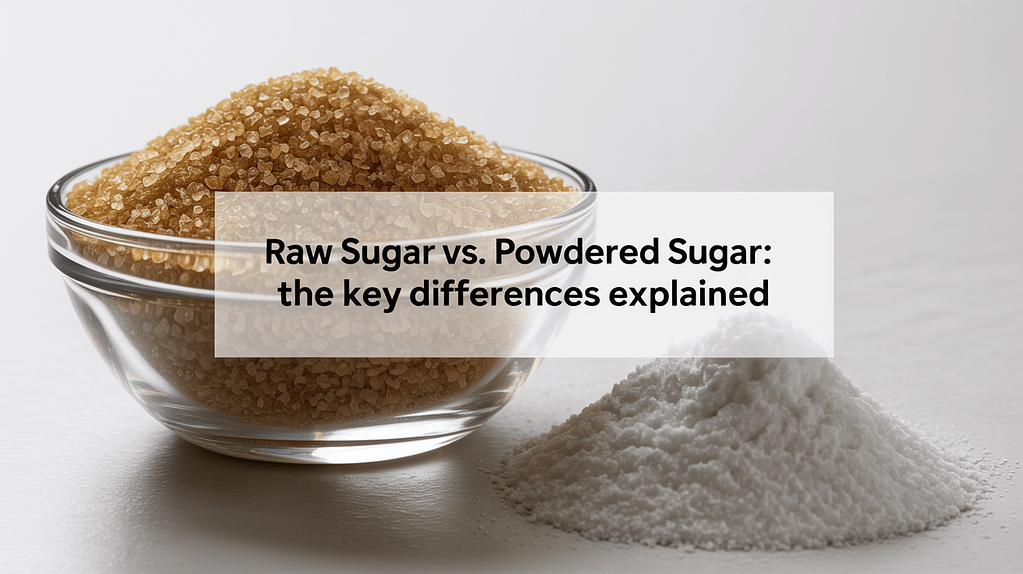
These two types of sugar are not interchangeable and serve unique purposes depending on your cooking goals.
What Is Raw Sugar?
Raw sugar is a less refined sugar that retains some natural molasses, giving it a light brown hue and rich, caramel-like flavor.
How Raw Sugar Is Made
Raw sugar is produced from the first crystallization of sugarcane juice:
- The juice is boiled and evaporated to form coarse crystals.
- The crystals are then centrifuged to remove some, but not all, molasses.
Characteristics of Raw Sugar
Raw sugar is recognizable by its:
- Large, golden crystals that don’t dissolve easily.
- Subtle molasses flavor that adds depth to baked goods.
Examples include turbinado and demerara sugar, both used in finishing and toppings rather than direct baking applications.
What Is Powdered Sugar?
Powdered sugar, also called confectioners’ sugar or icing sugar, is white sugar that has been finely ground into a soft powder and mixed with a small amount of cornstarch to prevent clumping.
How It’s Made
To produce powdered sugar:
- Granulated white sugar is pulverized to a very fine consistency.
- Cornstarch (about 3%) is added to keep it dry and free-flowing.
Characteristics of Powdered Sugar
Powdered sugar stands out due to:
- Silky smooth texture that dissolves almost instantly.
- Neutral, sweet flavor that doesn’t overpower recipes.
It’s essential in frostings, glazes, and decorative dusting.
Main Differences Between Raw and Powdered Sugar
These sugars are different in their form, flavor, and function.
Texture and Appearance
- Raw sugar: Coarse, golden brown crystals.
- Powdered sugar: Ultra-fine, soft white powder.
Processing Level
- Raw sugar is minimally processed and retains trace molasses.
- Powdered sugar is highly refined and made specifically for smooth blending.
Use Cases in the Kitchen
You’ll want to choose based on what you’re preparing.
- Raw sugar:
- Best for topping muffins or cookies.
- Adds crunch to baked finishes.
- Powdered sugar:
- Ideal for making frostings, icing, whipped cream, or dusting cakes.
Can You Substitute One for the Other?
While both are technically sugar, substituting them in recipes rarely works without issues.
Why Substitution Fails
- Raw sugar doesn’t dissolve quickly in liquids or batters.
- Powdered sugar lacks the bulk and texture raw sugar provides.
If a recipe calls for one specifically, use it or convert it properly (e.g., grind raw sugar to make a powdered substitute in emergencies).
Storage and Shelf Life Considerations
Storing sugar properly ensures freshness and usability.
Storing Raw Sugar
- Keep in a cool, dry container to prevent clumping.
- It has an almost indefinite shelf life if stored correctly.
Storing Powdered Sugar
- Store in an airtight container to prevent moisture from hardening it.
- If lumpy, sift before use to restore its fine texture.
Nutritional Comparison: Is One Healthier?
In terms of calories, both are similar, but raw sugar retains minimal nutrients due to its molasses content.
Nutritional Facts
- Raw sugar: Slightly more trace minerals like calcium and potassium.
- Powdered sugar: No significant nutritional content beyond pure sucrose.
However, neither is considered a health food and should be consumed in moderation.
FAQs About Raw Sugar vs. Powdered Sugar
Here are some questions and answers about raw and powdered sugar differences and usage:
Can I use raw sugar in place of powdered sugar for frosting?
No. Raw sugar does not dissolve well enough to create smooth frosting. Use powdered sugar or a powdered sugar substitute.
Can I make powdered sugar from raw sugar?
Yes. You can grind raw sugar in a blender or spice grinder until it becomes a fine powder, but the taste and texture will differ slightly.
Is raw sugar better for baking than white sugar?
It depends. Raw sugar adds flavor and texture but doesn’t dissolve as easily, which may affect some baked goods.
Why does powdered sugar contain cornstarch?
Cornstarch prevents clumping and helps maintain its fine texture, especially in humid environments.
Is raw sugar the same as brown sugar?
Not exactly. Raw sugar is less refined, while brown sugar is refined white sugar with molasses added back in.