
GroceryBrands.net is a participant in the Amazon Services LLC Associates Program. When you click our Amazon affiliate links and make a purchase, we earn a commission at no extra cost to you.
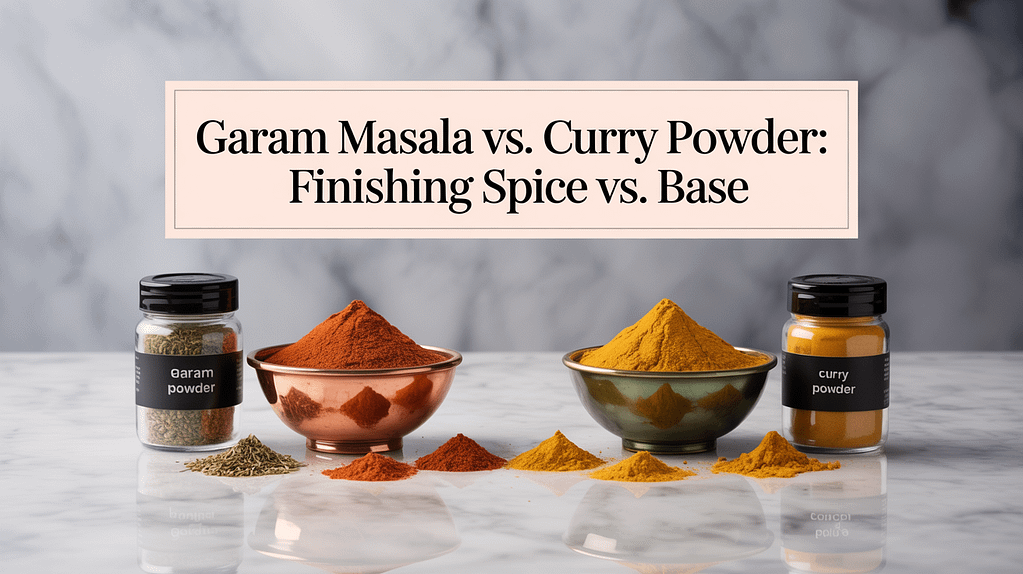
The primary difference between garam masala and curry powder lies in their origin, ingredients, and how they’re used in cooking—garam masala is a warm, aromatic finishing spice from India, while curry powder is a Western blend used earlier in cooking for flavor foundations.
Understanding the Origins of Each Blend
Garam Masala: A Classic Indian Staple
Garam masala, meaning “hot spice blend” in Hindi, originates from India and varies regionally. It’s typically added toward the end of cooking to preserve its delicate aromatics [1].
- Used across North and South Indian cuisine
- “Hot” refers to warming spices, not spiciness
- Varies by household—every family may have its own version
Curry Powder: A British Invention
Curry powder was created by British colonizers to mimic Indian flavors for Western kitchens. It’s not traditionally used in India [2].
- Standardized Western blend
- Designed for convenience, not authenticity
- Common in British and Caribbean dishes
Key Differences in Ingredients
Garam Masala Ingredients
While recipes differ, typical garam masala includes:
- Cumin
- Coriander
- Cardamom
- Cinnamon
- Cloves
- Black pepper
- Nutmeg
Flavor: Warm, complex, slightly sweet, and peppery
Curry Powder Ingredients
Curry powder tends to have a more earthy, turmeric-heavy profile:
- Turmeric (for color)
- Cumin
- Coriander
- Fenugreek
- Ginger
- Mustard seeds
- Chili powder
Flavor: Earthy, mildly spicy, and savory
How and When They’re Used in Cooking
Cooking with Garam Masala
Garam masala is usually added at the end of the cooking process to preserve its aroma [3].
- Finishing touch for curries, stews, lentils, and rice
- Can be sprinkled over vegetables or meat after cooking
- Used sparingly—too much can overpower a dish
Cooking with Curry Powder
Curry powder is added at the beginning or during the cooking process.
- Used as a base flavor in soups, stews, and marinades
- Often sautéed with onions and garlic
- Can be used to make quick “curry-style” dishes
Can You Substitute One for the Other?
Not Directly Interchangeable
While both are spice blends, their flavor profiles and culinary roles are different.
- Curry powder instead of garam masala: May make a dish earthy but not aromatic
- Garam masala instead of curry powder: Might add warmth but not enough depth
If needed:
- Add cumin, coriander, and turmeric to garam masala for a quick curry base
- Use curry powder and finish with garam masala for added depth
Health and Nutritional Benefits
Garam Masala
- Rich in antioxidants
- Anti-inflammatory from cloves and cinnamon
- Aids digestion—pepper and cardamom stimulate enzymes
Curry Powder
- Turmeric-rich, which contains curcumin (anti-inflammatory)
- Supports immune health and metabolism
- Contains antimicrobial and digestive properties
Also Read
- Want to try these in a homemade blend? See our guide on Homemade Taco Seasoning Mix
- Looking for more flavorful pantry ideas? Check out Spice Rack Organization Tips
FAQ Section
Is garam masala spicy?
No. Garam masala is warming, not spicy. It emphasizes aromatics like cinnamon and cardamom.
Can I use curry powder in Indian recipes?
You can, but it won’t taste the same as traditional Indian dishes. Authentic Indian recipes typically use individual spices or garam masala.
Why is curry powder yellow?
Curry powder contains turmeric, which gives it a bright yellow color.
Should garam masala be cooked?
It can be, but it’s usually added toward the end of cooking or used as a garnish for maximum aroma.
Final Takeaway
Garam masala and curry powder may seem similar, but they serve very different roles in the kitchen. Garam masala is an aromatic finisher rooted in Indian tradition, while curry powder is a Westernized blend used to build flavor early on. Understanding these differences will help you cook more authentic and flavorful dishes.