
GroceryBrands.net is a participant in the Amazon Services LLC Associates Program. When you click our Amazon affiliate links and make a purchase, we earn a commission at no extra cost to you.
Yellow mustard is mild and tangy, Dijon is sharp and smooth, and whole grain mustard is bold and textured, each offering unique flavor and ideal use cases in dressings, sauces, and marinades. Understanding the differences between these three popular mustard varieties can help you choose the perfect one for your salad dressings and beyond.
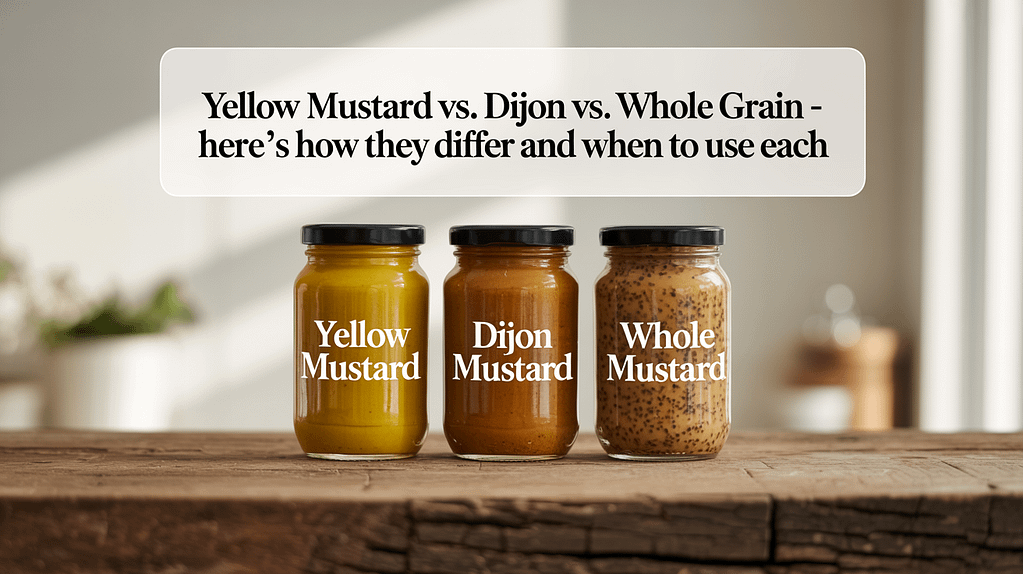
This guide explores the flavor, texture, ingredient profiles, and culinary applications of yellow, Dijon, and whole grain mustard to help you make the right choice every time.
The Basics of Mustard Types
All three mustards come from mustard seeds, but their preparation, seasoning, and processing create distinct results.
What Is Yellow Mustard?
Often labeled “American mustard,” yellow mustard is made from mild white mustard seeds, turmeric, vinegar, and spices.
- Flavor: Mild, tangy, slightly sweet
- Texture: Smooth and thin
- Common Uses: Sandwiches, hot dogs, classic dressings
What Is Dijon Mustard?
Originating in Dijon, France, this mustard is made from brown or black mustard seeds and white wine or wine vinegar.
- Flavor: Sharp, pungent, more acidic
- Texture: Creamy and thicker than yellow
- Common Uses: Vinaigrettes, marinades, sauces
What Is Whole Grain Mustard?
This type retains whole or partially ground seeds, offering a rustic and bold experience.
- Flavor: Bold and robust, sometimes spicy
- Texture: Coarse with visible seeds
- Common Uses: Cheese boards, gourmet dressings, meat glazes
Comparing Flavor and Heat Levels
Each mustard offers a different level of heat and depth, suitable for various recipes.
Mildest to Spiciest
Here’s how they compare on the heat scale:
- Yellow Mustard: Mild and family-friendly
- Dijon Mustard: Medium heat with a strong acidic punch
- Whole Grain Mustard: Heat varies but generally bold with bursts of flavor from intact seeds
Ideal Flavor Pairings
Each mustard complements specific ingredients:
- Yellow: Pairs well with mayo, honey, and sweet dressings
- Dijon: Excellent with vinegar, garlic, olive oil
- Whole Grain: Perfect with meats, cheeses, and robust salads
Best Mustards for Salad Dressings
Your choice of mustard can define the taste and texture of a salad dressing.
Yellow Mustard in Dressings
Works well in creamy or sweet styles:
- Great for honey mustard dressings
- Pairs well with mayonnaise and yogurt bases
Dijon Mustard in Dressings
Adds complexity and emulsification:
- Essential in classic vinaigrettes
- Helps blend oil and vinegar seamlessly
Whole Grain Mustard in Dressings
Best for texture and gourmet flair:
- Adds crunch and visual appeal
- Works beautifully with warm grain or potato salads
Nutritional Differences
Mustard is generally low in calories, but there are slight variations to consider.
Macronutrient Comparison
Here’s a general overview per tablespoon:
- Yellow Mustard: ~5 calories, 0g fat, low sodium
- Dijon Mustard: ~10 calories, 0.5g fat, moderate sodium
- Whole Grain Mustard: ~15–20 calories, small amount of fiber and fat from seeds
Ingredient Transparency
Things to watch for:
- Yellow Mustard may contain additives like food dye (turmeric is often natural)
- Dijon Mustard sometimes includes sulfites or wine
- Whole Grain Mustard is often minimally processed with recognizable ingredients
Storage and Shelf Life
Mustard is shelf-stable, but proper storage helps retain flavor and freshness.
Best Practices
To get the most from each jar:
- Store opened jars in the refrigerator
- Keep lids tightly sealed
- Use clean utensils to avoid contamination
Shelf Life Estimates
Mustards can last a long time when stored properly:
- Unopened: Up to 1–2 years
- Opened: Up to 12 months in the fridge
Tips for Choosing the Right Mustard
Each mustard excels in different contexts. Match the variety to your dish:
Choose Yellow Mustard If:
- You want a mild, familiar flavor
- You’re making kid-friendly or classic American recipes
- You need a sweet-and-tangy base for creamy dressings
Choose Dijon Mustard If:
- You want a bold, sharp tang in a vinaigrette
- You’re emulsifying oil and vinegar
- You’re making French or Mediterranean-inspired dishes
Choose Whole Grain Mustard If:
- You want added texture and visual appeal
- You’re making rustic or gourmet dressings
- You enjoy bursts of flavor with every bite
FAQ About Yellow Mustard vs. Dijon vs. Whole Grain
Here are some questions and answers about choosing between yellow, Dijon, and whole grain mustard for dressings and cooking.
Which mustard is best for vinaigrettes?
Dijon mustard is best for vinaigrettes due to its smooth texture and natural emulsifying ability. It blends oil and vinegar seamlessly and adds sharpness.
Can I substitute one mustard for another in a recipe?
Yes, but the flavor will change. Use yellow for a milder version, Dijon for tanginess, and whole grain for texture. Adjust quantities to taste.
Is Dijon mustard spicier than yellow mustard?
Yes. Dijon is made from stronger mustard seeds and includes wine vinegar, giving it a more pungent and zesty flavor.
What’s the healthiest mustard option?
All mustards are low in calories, but whole grain mustard offers a bit more fiber and natural ingredients. Avoid versions with added sugar or coloring.
Can I use mustard in both creamy and oil-based dressings?
Absolutely. Mustard—especially Dijon—works well in both creamy (with yogurt or mayo) and oil-based dressings by enhancing flavor and aiding emulsification.