
GroceryBrands.net is a participant in the Amazon Services LLC Associates Program. When you click our Amazon affiliate links and make a purchase, we earn a commission at no extra cost to you.
You squeeze the bottle, nothing happens… then suddenly ketchup rushes out like it changed its mind.
That little moment isn’t random. Ketchup is made to behave that way on purpose. A good ketchup should sit confidently on fries, stay put on a burger, and still be willing to pour when you actually want it to. The best ones feel smooth, rich, and “grippy,” almost like they’re designed to hug the food.
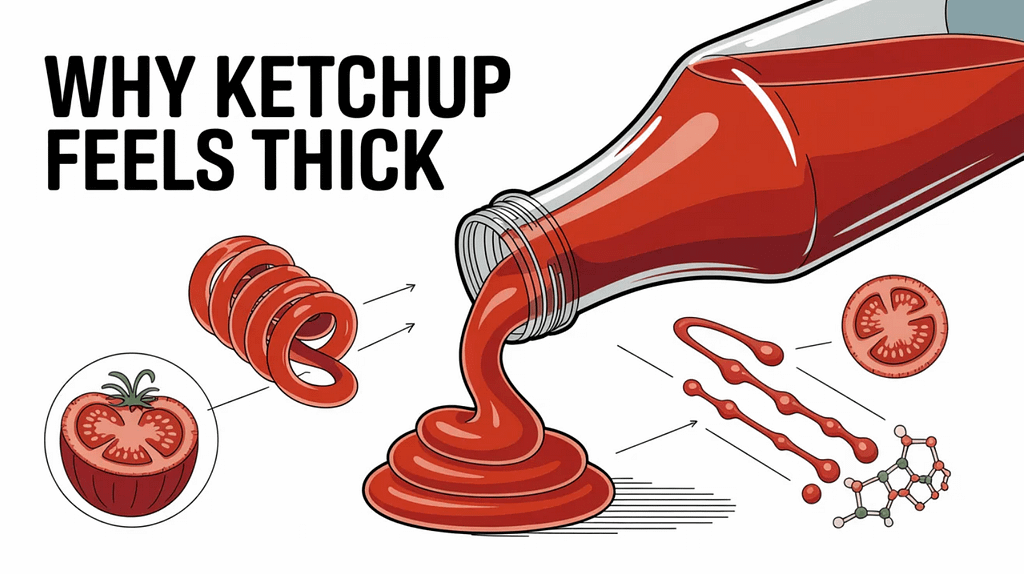
Tomato ketchup gets its familiar flavor from tomatoes and vinegar, but the way it moves and feels comes from how it’s built.
The “thick but pourable” trick
Ketchup is meant to be thick when it’s resting and easier to flow when you shake or squeeze it. That’s why tapping the bottle or giving it a quick shake often “wakes it up.”
This isn’t about being fancy. It’s about making ketchup practical:
- Thick enough to stick to food
- Smooth enough to spread
- Pourable when you apply pressure
If ketchup poured like water, it would run off fries and make buns soggy. If it stayed too thick, it would feel pasty and hard to use.
What creates that smooth, clingy feel
Think of ketchup texture as a mix of three things working together:
Tomato solids (how “tomato-rich” it is)
More tomato content usually gives ketchup a fuller body. It can taste deeper and feel more substantial, especially when you dip instead of drizzle.
The thickening “support”
Many ketchups use ingredients that help hold everything together so the bottle stays consistent. Without that support, ketchup can separate more easily, feel watery, or look uneven.
The blend and cook style
How the ketchup is blended and cooked affects how silky it feels. Some bottles feel velvety. Others feel a little grainy or thin, even if the flavors are similar.
If you’ve ever preferred one ketchup because it felt smoother and more satisfying, texture was doing a lot of that work.
Why ketchup sometimes separates (and why it’s usually normal)
That watery layer you sometimes see is common. It doesn’t automatically mean the ketchup is bad. It usually means the liquid portion drifted upward while the thicker portion settled.
A quick shake often fixes it.
Ketchup tends to separate more when:
- It sits for a long time without being used
- It’s stored warm, then cool, then warm again
- The cap isn’t closed tightly
- The bottle gets squeezed and left partially “pressurized”
If your ketchup smells fine and tastes normal, separation is usually just a texture issue.
If you’re trying to keep ketchup tasting and behaving like it did on day one, clean handling and cool storage can help it stay more consistent.
The mouthfeel difference: “smooth,” “sticky,” and “watery”
People describe ketchup texture in different ways, but most bottles fall into a few familiar categories.
Smooth and rich
This is the “restaurant-style” feel many people love. It coats food without feeling heavy.
Sticky and slow
This is the ketchup that sits like a mound and moves reluctantly. Some people love it for dipping. Others find it too thick.
Light and pourable
This kind of ketchup spreads easily, but it can feel watery when you dip.
None of these are objectively wrong. They just match different eating styles. Dippers often prefer thicker ketchup. Drizzlers often prefer smoother, more pourable ketchup.
How sweetness can change texture (even if you don’t notice)
Sweetness isn’t only about flavor. It can change how ketchup feels in your mouth. A very sweet ketchup can feel slightly “syrupy,” while a less sweet bottle can feel cleaner and lighter.
That’s one reason some people enjoy ketchup with a different sweetener approach, even when the goal isn’t strictly “less sugar.” The flavor and the feel often shift together.
Why ketchup behaves differently on different foods
Here’s a fun detail: ketchup can feel thicker on a hot burger than it does on a cold plate.
Heat softens ketchup and makes it spread more easily. Cold ketchup can feel denser. Crispy foods also “grab” ketchup differently than soft foods, which is why dipping fries feels more satisfying than spreading ketchup on bread.
So if a ketchup feels perfect on fries but odd on a sandwich, it may not be a “bad ketchup.” It may just be the wrong match for that job.
Picking the right texture for how you eat ketchup
Instead of buying ketchup based only on brand habit, choose it based on use.
If you dip a lot (fries, nuggets, onion rings)
Look for ketchup that feels thick, smooth, and clingy. Those tend to stay on the bite instead of sliding off.
If you spread it (burgers, sandwiches, wraps)
Look for ketchup that’s smooth and easy to spread, without turning watery.
If you cook with it (glazes, quick sauces, meatloaf topping)
A richer, more tomato-forward bottle usually holds up better when heated.
If you like the richer style, vine-ripened ketchup often tastes more tomato-forward and can feel fuller, though the recipe still decides the final texture.
A quick “plate test” to judge ketchup texture in 30 seconds
Try this next time you open a new bottle:
- Put a small spoonful of ketchup on a plate.
- Tilt the plate slightly.
- Watch what happens for 5 seconds.
- If it stays put and barely moves, it’s a thick, dip-friendly ketchup.
- If it slowly slides while holding its shape, it’s a balanced “all-purpose” ketchup.
- If it runs quickly, it’s a more pourable ketchup.
Then take a bite with a fry. The mouthfeel will confirm what you just saw.
Bottom line
Ketchup texture is designed. It’s supposed to be thick enough to cling and smooth enough to pour when you want it to. Tomato richness, the way the ketchup is held together, and how it’s blended all shape whether a bottle feels silky, sticky, or thin.